WIRKRAUM
The Space That Remembers
What remains of a body when it leaves a place?
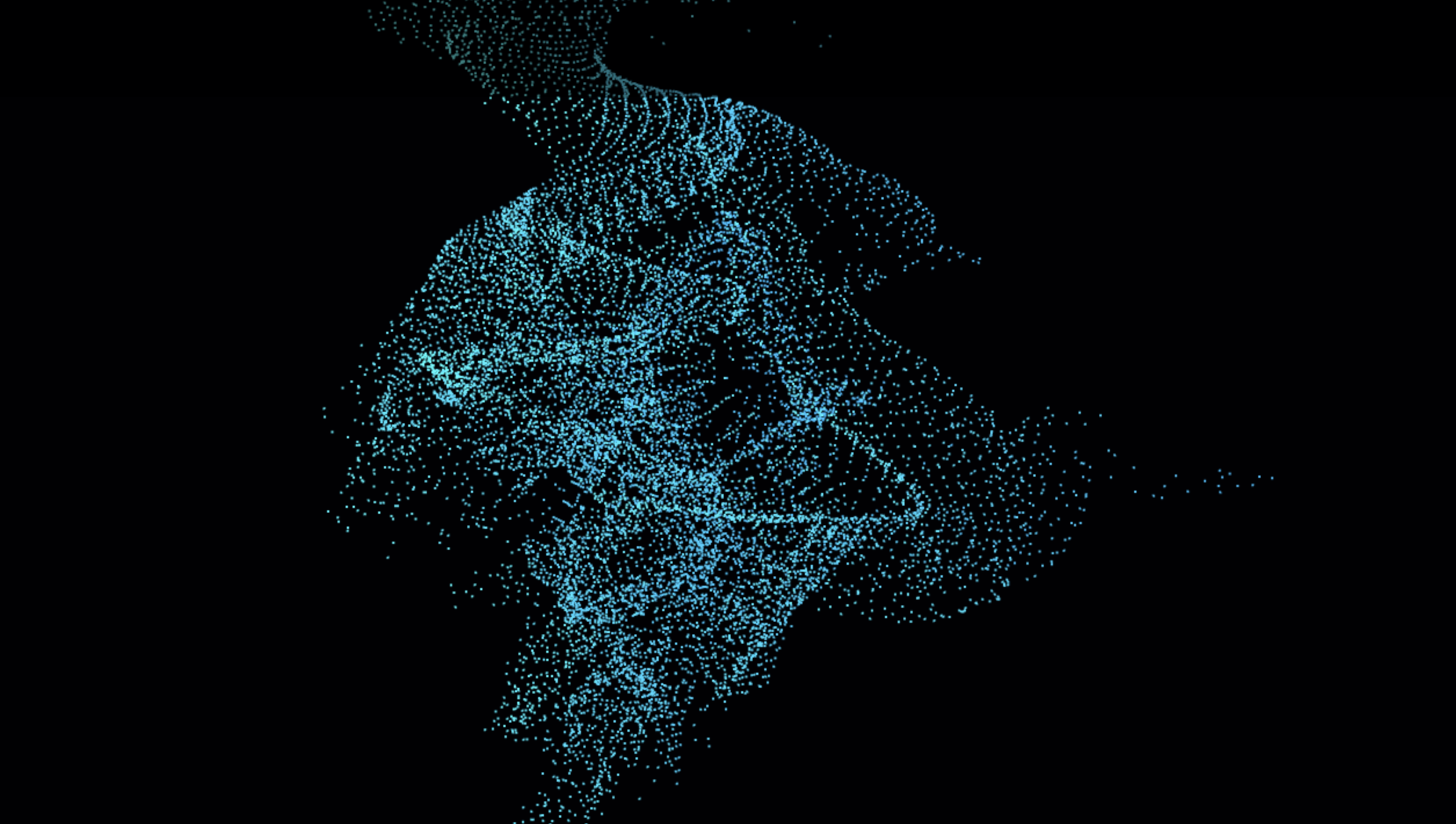
Wirkraum is an art and interaction design project that explores the relationship between presence, memory, and space. Through a camera and a generative system developed in TouchDesigner, the visitor's activity feeds a visual field of traces that accumulate, persist, and fade. The space temporarily preserves what is no longer there.
Perception and the Memory of Place
The project starts from Jakob von Uexküll's concept of Umwelt: each organism relates to its environment through its own capacities for perception and action. The orientation of bees and their relationship with learned places offer a reference for investigating how prior experience can continue to give meaning to a position in space.
Wirkraum proposes a partial artistic translation of that principle. The first exploration focuses on visual persistence; its development investigates how a remembered reference can condition later responses of the system.
The Experience
The visitor enters the camera's field and leaves a visual inscription. As they move or withdraw, their trace remains for a while, coexisting with new presences. This continuity invites an experience of the place as a relationship between what happens, what remains, and what disappears.
From Trace to Matter
The project proposes two forms of output: a real-time visual experience and a physical object derived from its record. A state of the field can become a relief or geometry for digital fabrication, making the temporal accumulation of interaction tangible.
A Project in Development
Currently, Wirkraum includes visual explorations and a prototype generative field. The next phases address the rules of orientation and return, the materialization of traces, and the evaluation of the experience.
The project forms part of research into more-than-human interaction: how knowledge of other ways of perceiving and acting can transform the design of our environments.